
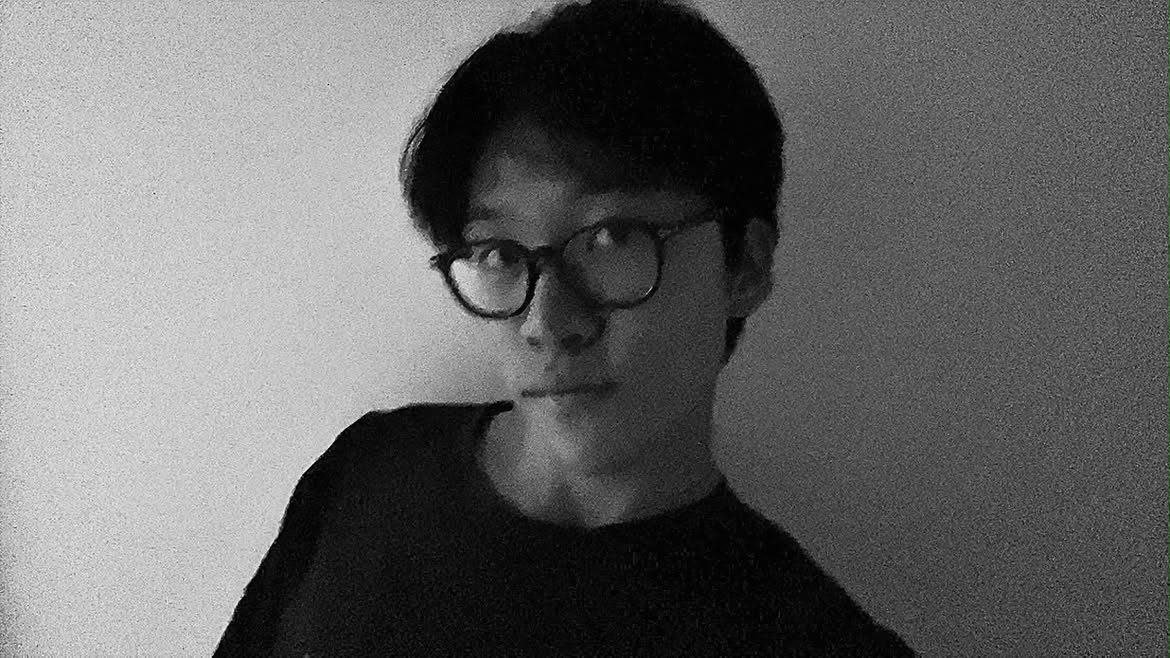
“I think poetry is a very living thing, which is why I think I have to be a person first. And when you are a person first, you’re just living life. A real authentic life that doesn’t need to squeeze or sponge poetry out of it. I think being a poet also requires you to be a listener.“
Homeplace Magazine: Introduce yourself! Who are you, and what do you make?
My name is Lucas Lui, and I am a poet. I’m 18 years old and about to be a sophomore at NYU. I’ve been writing for quite some time now. I first started writing poems when I was 13 in my freshman year of high school, and they were these small quatrains of self-contained thoughts. Sophomore year was when I stretched into a long narrative, stream-of-consciousness sort of writing. And then junior year was prolific. Each time I wrote, it felt like I was getting closer to finding my voice, what I liked and disliked, the parts of craft that really interested me. And senior year up until now, I guess, I had this period of reluctance to write. I wasn’t feeling very inspired. But this June, I attended a writing retreat program at NYU called Writers in Florence, and in that period, I think creativity and inspiration came back to me. Now I’ve just been answering the call.
Where are you from, and how has your hometown shaped the way you create?
I’m originally from New York, but I like to call NYU my home. In the summertime right now, I’m in my suburban hometown of Staten Island. It’s so…different than me. I would describe it as the complete opposite of who I am. I’ve always felt a bit of an outsider, and now that I’m thinking about it, I’m almost like their nightmare of a person? Just completely different in values and appearance. But I think it’s helped me create by forcing me not to care what others think of my art or who I am. I believe, in terms of being a poet, you have to be a person first. And my hometown had sort of restrained me from my personhood at times. But now that I’ve returned to Staten Island with a new lens, I’ve learned that I can be my own person. And by doing that, I think that has helped me become a better writer. Pure liberty.
HPM: If someone wanted to understand your work, where should they start?
Well, first I have a Linktree (https://linktr.ee/mucus_)! That’s where I have my, I guess you can say, canon of poetry. Things that have been accepted and published by literary magazines. But out of all the links, one I would love for people to start with and click on is a poem called “Devour Me (Delicacy).” That’s a poem I look back on and always say I’m proud I wrote it. It’s very emotionally charged with anger, and like the previous question, is about my hometown and its treatment. But I think that poem is also a very strong declaration of “I am a poet.” That I do take my art seriously.
HPM: What are you obsessed with right now?
Right now I’m obsessed with two things. One is my roots and finding the time to retreat to them. Since I’ve come to NYU, I’ve befriended so many different artists, and it’s so interesting to see what we’re all up to in our own creative spaces. Just talking and seeing where we are in our lives. The next is more materialistic, but I’ve been obsessed with silver jewelry for some reason. I’ve been more comfortable in my own skin and who I am since college, and I think jewelry has led me to explore self-expression. The designs on rings or the feeling of silver on my wrists and neck.
HPM: Where do your best ideas usually come from?
My best ideas usually come from living life followed by self-reflection. I’ve been practicing removing the goal to force a poem out of me. I think poetry is a very living thing, which is why I think I have to be a person first. And when you are a person first, you’re just living life. A real authentic life that doesn’t need to squeeze or sponge poetry out of it. I think being a poet also requires you to be a listener. And so by observing and listening to the life around me, I’m able to find the language, sometimes not part of my vocabulary, and that’s what makes the poem exciting. A poem that transports me into a different lexicon I don’t usually tap into. And when it does that, I can make these interesting associations, and it’s really interesting. It will come naturally.
HPM: What’s a creative hill you’ll die on?
You have to write non-award-winning work. To me, poetry has always been a catharsis. A way of letting my feelings out. I guess that’s just part of my poetics, but a poem just needs to capture what I’m feeling or felt. And your feelings don’t need to be validated by a journal, magazine, or prize. And also, not every poem you write can be award-winning. Like, all the poems that are in my Linktree are not all the poems I’ve written before, you know? We need to have those moments of mud in order to maybe pick out a gem or just a rock, hold onto it and just be like “oh what a pretty stone.”
HPM: What does your camera/sketchbook/notes app look like right now?
I have a journal my high school history teacher, Ms. Musanti, gave me which has a compass on it. She told me the needle points inward, so when I’m lost, I can still find myself. And so that journal right now has all these blurbs and quotes. Its own sort of found language. Things my friends have said such as “…tastes like TV static.” Or what I’ve observed, such as “birthday candles in the rain,” “a blue marble encoded with DNA,” “club music in the shower.” I don’t know if I’ll use them in a poem. Maybe I won’t. But they’re just some things I found interesting in the moment.
HPM: What do you wish people asked you about your work?
“What song would you pair this poem with?” Poetry is a kind of music, and poets have their own voices for their sound. Sometimes when I write, I have a song playing in the background, very quiet and mellow. And the music can help push the poem towards its own sound. I don’t think I’ll have a perfect answer to the question, but I think it would be interesting to reflect on because I do find a very strong kinship between music and poetry.
HPM: Recommend one film, album, book, exhibition, or artist everyone should experience.
Everyone should read “Teaching My Mother How To Give Birth” by Warsan Shire. It’s a gorgeous, short collection of poems I stumbled upon recently. This July I’ve read almost 7 books, and her collection was most surprising and inspirational to me. Reading poets and listening to their voices can teach one how they can develop their own voice. And this collection has lessons on implementing sorrow and rage in unexpected ways.
Right now, I’m reading a novel by Sean Hewitt called “Open, Heaven” and it’s a very tender book. For people who love easily and quickly; who feel romantic love isn’t appearing and sort of what to do in that waiting time. That’s something I’m learning, at least.
HPM: What else should we know about you?
They should know when you befriend a writer, don’t expect that you won’t be written about. It can happen; beware! But something about me is I write intimately, which requires sensitivity. And being vulnerable is when I am most in tune with myself. It’s a lesson I think others should be curious about and practice.
Watch and read more about Lucas’s poetry at https://linktr.ee/mucus.